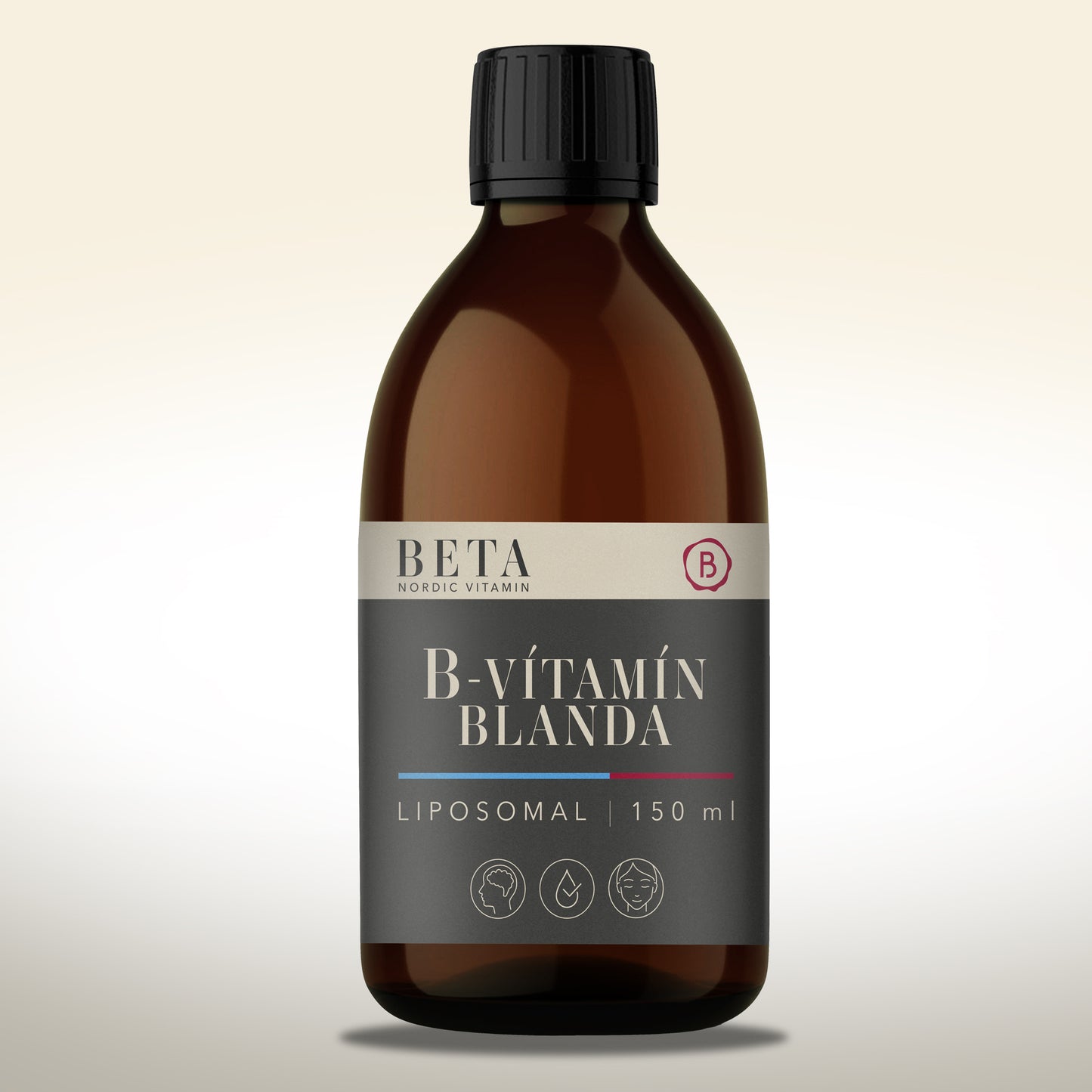
Liposomal B-vítamínblöndur
Liposomal B-vítamínblöndur
B-vitamins are a total of 8, and each of them has its specific function in the body. B vitamins play numerous roles for the nervous system, such as the formation of neurotransmitters, but also in the formation of amino acids, sex hormones, and cortisol. They also play an important role in the body's energy and metabolism, and are important for the function of the digestive organs where they assist the body's enzymes in converting carbohydrates and other food into glucose, which the body then burns to produce energy. B vitamins are also important for normal cell function, for the function of muscles, eyes, cardiovascular system, formation of red blood cells, as well as maintaining the growth of nails and hair.
A properly composed blend of B vitamins ensures that the body can perform its various functions with the best possible results. To maximize the capacity and strength of each of them, we have combined them in a special liposomal B vitamin.
"Liposomal" refers to when the vitamin is encapsulated in a double lipid membrane. The membrane acts like a ferry for the vitamin as it passes through the digestive tract, protecting it from too rapid breakdown. This double lipid membrane then easily binds to the cell walls of the intestines, thereby significantly increasing the absorption of the vitamin, compared to traditional tablet-form vitamins.
Liposomal B vitamin contains:
B1 (thiamine). Contributes to normal, energy-yielding metabolism, normal nervous system and heart function, as well as psychological function. Nerve cells primarily feed on carbohydrates and are dependent on thiamine to be able to use carbohydrates as an energy source. Nerve cells are therefore the first and most affected by thiamine deficiency.
B2 (riboflavin): Maintains normal function of the nervous system, mucous membranes, red blood cells, skin, and vision. Also contributes to normal iron metabolism, protects cells from oxidative stress, and reduces fatigue.
B3 (niacin): Similar in function to B2. A significant number of studies show that it contributes to cholesterol reduction, where LDL decreases and HDL increases.*
B5 (pantothenic acid): Contributes to normal energy metabolism and mental performance; normal synthesis and metabolism of steroid hormones, vitamin D, and some neurotransmitters. Reduces fatigue.
B6 (pyridoxine): Supports immune system function and reduces symptoms of fatigue, as well as participating in the synthesis and metabolism of carbohydrates, fats, amino acids, nucleic acids, protein, and hemoglobin.
B7 (biotin): Also known by other names, such as vitamin H and coenzyme-R. We get biotin from food, and it is also produced in the intestines when the bacterial flora of the digestive system is healthy. Contributes to the maintenance of skin and hair, as well as normal nervous system function, metabolism of energy-yielding nutrients, and maintenance of normal mucous membranes.
B9 (folic acid): Supports nervous and cardiovascular system function and is essential for all cell division. Participates in the formation of DNA and RNA nucleic acids, as well as playing an important role in the formation of red and white blood cells, and other rapidly dividing cells. Maintains healthy mucous membranes.
B12: Contributes, among other things, to normal and energy-yielding metabolism, normal immune system function and nervous system function (nerve regeneration), and mental function, as well as participating in the normal formation of red blood cells. B12 deficiency is well known and can have serious consequences. More about B12 vitamin.
Liposomal B-vitamin is a perfect blend that ensures maximum utilization/absorption.
Vegan and free from allergens.
*Canner PL, Berge KG, Wenger NK, et al. Fifteen year mortality in Coronary Drug Project patients: Long-term benefit with niacin. J Am Coll Cardiol. 1986;8:1245-1255.
Gat ekki hlaðið upplýsingum um afhendingartíma